

Unlocking Animal Happiness
Realized Advancements in Slaughter Practices: A Positive Impact on Larger Farm Animals
Two significant advancements have positively transformed the slaughter practices of larger farm animals in Flanders: the transition to mandatory stunning in slaughterhouses and the introduction of stricter regulations on domestic slaughter.
1. Transition to Mandatory Stunning in Flanders’ Slaughterhouses
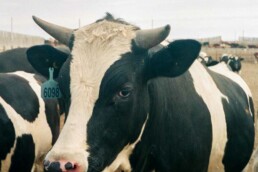
In the past, around 131,976 larger farm animals were slaughtered without stunning each year in Flanders due to religious reasons, which raised significant animal welfare concerns. However, since January 1, 2019, a ban on unstunned slaughter was implemented, allowing these animals to be stunned before slaughter, a less painful method. For cattle, a post-cut stunning method is used, where a captive bolt pistol is applied immediately after the throat cut. This is due to the fact that electronarcosis, an advanced stunning method, was not refined enough for use on all cattle at the time. With advancements in stunning methods, from 2020, it became mandatory to stun calves before slaughter.
2. New Regulations on Domestic Slaughter of Flemish Farm Animals
In 2023, around 5,563 larger farm animals, including 4,722 sheep, 787 pigs, and 54 goats, were slaughtered domestically in Flanders. Initially, these animals could be slaughtered at home without a clear legal obligation for prior stunning. However, to minimize animal suffering during the slaughter process, stricter regulations were introduced in the Flemish Animal Welfare Code. This allows only individuals with verified competence and access to anaesthetic instruments to conduct slaughters outside of official slaughterhouses.
137,539 Animals
Stunning Practice Impacting 131,976 Animals Annually for a More Humane End
41,216 Cows, Oxen and Bulls
40,726 Calves
31,074 Sheep and Lambs
23,191 Goats
__
Transition from Unregulated Domestic Slaughter to a Controlled Environment Affecting 5,564 Animals
4,722 Sheep
787 Pigs
54 Goats
__
Eliminating Unstunned Slaughter for Religious Reasons
In the past, a considerable number of larger farm animals, totalling about 131,976, were slaughtered without stunning in Flanders each year.[1] This includes around 41,216 cows, oxen, and bulls,[2] 40,726 calves,[3] 31,074 sheep and lambs,[4] and 23,101 goats.[5] Primarily for religious reasons, these animals were subjected to unstunned slaughter, which is associated with significant animal welfare concerns.[6]
However, since January 1, 2019, these animals are now stunned before slaughter, which is a less painful method of death.[7] Yet, electronarcosis, an advanced stunning method, was not initially applied to all animals. For cattle, post-cut stunning is still used, which involves immediately using a captive bolt pistol after the throat cut, enhancing loss of consciousness and improving welfare.[8] As the technique advanced and became practical for calves, it became mandatory from January 1, 2020, to stun calves with electronarcosis before slaughter. [9]
Enhanced Regulations for Domestic Slaughter
In 2023, approximately 5,563 larger farm animals were slaughtered domestically in Flanders. This figure includes 54 goats, 4,722 sheep, and 787 pigs.[10] Previously, these animals could be slaughtered at home with the presumption of prior stunning, but without a clear legal obligation to do so.[11] Furthermore, there were no requirements for proven competence or possession of anaesthetic instruments. In an effort to minimize the animals’ pain, suffering, and stress during the slaughter process, stricter regulations were introduced. These new rules allow only individuals with verified competence and access to anaesthetic instruments to conduct such slaughters outside of official slaughterhouses.[12]
1. The Path Towards Prohibiting Unstunned Slaughter for Larger Farm Animals
Insights from Flemish Slaughterhouses
The process of slaughtering animals without prior stunning has significant welfare implications. Notably, the act of cutting their throat and the resulting drop in blood pressure lead to pain, distress, fear, and panic among the animals. [13] For instance, cattle slaughtered without stunning typically experience death five to six minutes after their throats are cut, while calves lose consciousness around two minutes post-cut, with death occurring between three to three and a half minutes. Sheep exhibit convulsions for approximately two and a half to three minutes after their throats are cut. [14]
The subsequent sections outline the animal welfare issues observed by Piet Vantemsche[15] in Flemish slaughterhouses during the period when the unstunned slaughter of larger farm animals was still permitted in Flanders:[16]
‘When cattle are fixated in a box with only their heads immobilized, additional cuts are challenging to perform because the animals rapidly collapse and end up slumped in the box, causing the wound to close off. This slows down bleeding and delays unconsciousness due to the ballooning that can’t be trimmed. Sheep cut in the restrainer usually collapse after cutting, making trimming impossible and leading to a wound that closes off, with the subsequent negative consequences for bleeding and loss of consciousness. One sheep even jumped out of the restrainer after being cut.
These scenarios result in prolonged consciousness in the animals, leading to increased suffering and diminished animal welfare.
During the release from the fixation box and hoisting of the animals, animal welfare is often not considered. With calves, there is no check for loss of consciousness; instead, a fixed short release time is set, regardless of individual control of the calves, to maintain a high slaughter rate.
Although it was not always possible to determine whether unconsciousness had occurred at the time of release and hoisting, it was clear that most calves at that time (25 seconds after cutting) were still not unconscious, even during subsequent hoisting.
With cattle, it was observed that the release was based on rudimentary control by a staff member. The cattle were only hoisted after death had occurred, limiting the rate to 10 to 15 animals per hour. With sheep, no consideration is given to or waiting for loss of consciousness before further actions (release from fixation, hoisting) are taken.
It is clear that during the hoisting of calves and sheep, the legislation is not being followed (Article 15(3) a) and b) of Regulation 1099/2009.
The following fixation methods are prohibited according to Regulation 1099/2009:
- Hanging or hoisting of animals that are conscious; and
- Mechanically clamping or tying together the legs or feet of animals.’[17]
Further noteworthy observations by Piet Vantemsche, pertaining to the practice of unstunned slaughter in Flanders, are deserving of full reproduction:
‘When slaughtering cattle without any form of stunning, significant improvements can be made in terms of infrastructure (fixation boxes) to optimize and maintain fixation until loss of consciousness. This can also allow for the, often occurring, ballooning to be trimmed, thereby accelerating bleeding and loss of consciousness. The fixation boxes for calves are of better quality and better suited for proper fixation.
The time until release (release from fixation and falling out of the box) is usually too short in the case of unstunned slaughter, driven by economic reasons (slaughtering speed), especially in calves and sheep, resulting in animals being released while still conscious.
It can be observed that unconsciousness in sheep and calves, slaughtered without stunning, only occurs above the bleeding trough, whereas it should have occurred before releasing the fixation. With cattle slaughtered without stunning, it was only observed that some animals became unconscious after being released from fixation onto the grating, and no animals were hoisted while still conscious. However, it cannot be ruled out that this may occur elsewhere.
A fixed time set for releasing the fixation and for release is mainly driven by economic motives (higher line speed), disregarding the individual characteristics of an animal that can influence the time until unconsciousness (age, weight, breed, temperament, muscling, etc.). At most, for sheep and also for poultry (due to a certain uniformity of the animals), a fixed time until release could be workable.
During unstunned slaughter, the regulation is usually not respected when releasing the animals from the restraint and hoisting them, but sometimes also during the fixation process (especially for sheep and calves). Standard procedures and monitoring protocols should be available for both techniques and should be adhered to. These should also be better supervised and carried out by the animal welfare officer and qualified personnel examined for their competence.
Finally, consideration could also be given to possible conditions that slaughterhouses should meet to be allowed to perform religious slaughter, and to pre-inspections by the competent authorities.’[18]
These observations, from Flemish slaughterhouses highlighted several animal welfare issues associated with unstunned slaughter. For instance, inadequate fixation methods for cattle and sheep resulted in prolonged consciousness, leading to increased suffering. Furthermore, the release and hoisting processes lacked proper consideration for loss of consciousness, with animals often being hoisted while still conscious.
Legislative Response
To address these animal welfare concerns, the Flemish legislator implemented a ban on unstunned slaughter on July 7, 2017, and added Article 15§2 to the Flemish version of the Belgian Animal Welfare Act, stipulating:
‘If animals are slaughtered according to special methods required for religious rites, the stunning must be reversible, and the death of the animal must not result from the stunning.’[19]
The inclusion of the ‘reversibility’ requirement was crucial, taking into account the needs of religious communities that emphasize the importance of ensuring the animal is not killed directly as a result of stunning. This legislation faced appeals in the Belgian Constitutional Court and the European court system, ultimately becoming pivotal in its final judgment.
The preparatory documents of the decree outline the reasoning behind introducing a ban on unstunned slaughter in Flanders:
‘Flanders places great importance on animal welfare. The aim is, therefore, to eliminate all avoidable animal suffering in Flanders. The slaughter of animals without stunning is incompatible with this principle. Although other measures, less drastic than a ban on slaughtering without prior stunning, could somewhat limit the negative impact of this method of slaughter on animal welfare, these measures cannot prevent a severe impairment of that welfare from continuing to exist. The gap between eliminating animal suffering and slaughtering without prior stunning will always be very considerable, even if less radical measures were taken to minimize the impairment of animal welfare.
Nonetheless, a balance must be sought between the protection of animal welfare and freedom of religion.
Both Jewish and Islamic religious rites require the animal to be drained of as much of its blood as possible. Scientific research has shown that the fear that stunning would adversely affect bleeding out is unfounded (…)
Furthermore, both rites require that the animal be intact and healthy at the time of slaughter and that it die from bleeding. Electronarcosis is a reversible (non-lethal) method of stunning in which the animal, if it has not had its throat cut in the meantime, regains consciousness after a short period and does not feel any negative effects of stunning. If the animal’s throat is cut immediately after stunning, its death will be purely due to bleeding. In view of this, the conclusion set out in Mr. Vanthemsche’s report may be followed. According to that conclusion, the application of reversible, non-lethal stunning during the practice of religious slaughter constitutes a proportionate measure which respects the spirit of religious slaughter in the framework of freedom of religion and takes maximum account of the welfare of the animals concerned. At the very least, the obligation to use electronarcosis for slaughter carried out in accordance with special methods required by religious rites does not, therefore, constitute a disproportionate interference with freedom of religion’.[20]
Consequently, only reversible non-lethal stunning is permissible. Article 5 of the decree, adding Article 45ter to the Animal Welfare Act, reads as follows:
‘in derogation of Article 15, stunning in cattle slaughtered according to special methods required for religious rites may temporarily take place immediately after the throat cut, until the date determined by the Flemish Government that reversible stunning is practically applicable for these species.’[21]
Regarding electronarcosis, as it wasn’t yet refined for cattle, post-cut stunning was implemented, involving the immediate use of a captive bolt pistol after the throat cut. This method significantly enhances the loss of consciousness in animals, thereby improving their welfare. However, as the technique advanced and became practical for calves, it became mandatory from January 1, 2020, to stun calves with electronarcosis before slaughter.
Appeals in the Belgian Constitutional Court and the European court system
Following the Flemish ban on unstunned slaughter, five appeals for annulment were lodged with the Constitutional Court. This led to the court raising three preliminary questions to the European Court of Justice (in Case C-336/18) regarding the compatibility of the ban with European law.[22] These questions primarily sought to ascertain whether Flanders could legally deviate from the leeway granted in the European Slaughter Regulation to slaughter animals without stunning, if dictated by religious prescriptions, whether the ban infringed upon the right to freedom of religion as enshrined in the EU’s Charter of Fundamental Rights, and whether it violated other principles included in the Charter, such as equality before the law and non-discrimination.
The preliminary ruling by the European Court of Justice acknowledged the necessity[23] of the Flemish ban on unstunned slaughter to enhance animal welfare. It also found that the interference with the right to religious freedom was proportionate to achieving the objective of animal welfare improvement. The Court concluded that European law did not prohibit a Member State from enacting legislation requiring reversible stunning procedures (that, thus do not result in the animal’s death) in religious slaughter.
Subsequently, the Belgian Constitutional Court confirmed the preliminary ruling of the European Court of Justice, emphasizing the importance of animal welfare while respecting religious freedoms:[24]
‘The petitioning parties assert that religious slaughter adheres to specific religious prescriptions. Principally, these require Jewish and Islamic believers to consume only meat from animals slaughtered without prior stunning. This is to ensure that the animals are not subjected to any process that could cause injury or death before slaughter, and that these animals are fully bled out. It’s important to note that within both the Jewish and Islamic religious communities, opinions on religious slaughter vary. However, at least a portion of these communities do not permit stunned slaughter.
Promoting the protection and respect for animal welfare, as sentient beings, during slaughter, is a moral value shared by numerous individuals in the Flemish Region. Thus, the aim of avoiding any preventable suffering of animals intended for consumption during slaughter falls within the protection of morality and the rights and freedoms of individuals who value animal welfare in their worldview. (…)
The protection of animal welfare is an ethical value that is increasingly recognized in Belgian society, as well as in other contemporary democratic societies. These societal developments must be taken into account when considering animal welfare as a justification for limiting rights and freedoms, particularly for limiting of the outward manifestation of religious beliefs.(…)
The decree of July 7, 2017, does not prohibit religious slaughter per se[25], but it does affect the specific religious act of slaughtering. It requires that this religious act only be performed after the animal has been stunned in a reversible manner. In this way, the freedom of thought, conscience, and religion is only restricted to the extent that this religious act is related to the objective pursued by the contested decree of protecting animal welfare.
As previously mentioned, the decree does not prohibit religious slaughter as such, but only affects one aspect of the specific ritual act of slaughtering. Namely, the aspect related to the manner in which the animal is killed that is related to the protection of animal welfare. The decree does not touch upon the other aspects of the ritual of slaughter, which can be carried out by the butchers in accordance with the prescriptions of the Jewish and Islamic religions.
To address the concerns of the relevant religious communities as much as possible, the article specifies that the stunning must be reversible and must not lead to the death of the animal if killing is the subject of special slaughter methods prescribed by the ritual of a religious service.
From the preparatory works in parliament, it appears that the legislator believed that this provision addresses the concerns of the religious communities. By respecting the religious prescriptions that the animal should not have died at the time of slaughter and that it should be fully bled out when applying the technique of reversible stunning, the provision offers the possibility of using the technique of reversible stunning in the slaughter of animals as part of a religious rite. It does not define what the special slaughter methods required for religious rites should be. Therefore, it should be understood as providing, as an accommodation to Jewish and Islamic believers, an alternative stunning method, without pronouncing on the content and scope of religious prescriptions regarding the slaughter of animals.
Although according to the petitioners, this alternative method of stunning does not comply with the religious requirements of the Jewish and Islamic faith communities, or at least a part thereof – a viewpoint the Court cannot examine for accuracy – this accommodation can be taken into account when assessing the proportionality of the restriction on the freedom of thought, conscience, and religion.
From this, it follows that the restrictions imposed by the contested decree on the freedom of thought, conscience, and religion by allowing reversible stunning prior to slaughter, meet a compelling social need. They are also proportionate to the objective pursued to promote animal welfare. Consequently, the contested decree does not entail an unjustifiable limitation on the freedom of thought, conscience, and religion. (…)
Eleven appeals were brought before the European Court of Human Rights in an attempt to overturn the Flemish ban on unstunned slaughter,[26] claiming it violated the freedom of religion protected by Article 9 of the European Convention on Human Rights.[27] Despite these appeals, the Court upheld the ban, finding no violations of the Convention’s provisions.
As per Belgian and European courts, unstunned slaughter can be legally banned, even for religious reasons. Several factors may have contributed to the validation of the Flemish ban on unstunned slaughter:
- A meticulous process was followed leading to the ban, involving the appointment of an independent intermediary, Piet Vanthemsche, by the Flemish Minister of Animal Welfare, Ben Weyts. Vanthemsche, a well-respected figure in the agriculture and food sector, initiated a dialogue aimed at enhancing animal welfare related to religious slaughter and transitioning towards a Flemish ban on unstunned slaughter. He authored a report after engaging with various stakeholders, visiting slaughterhouses , and considering survey results on religious slaughter by the Belgian Meat Federation (FEBEV). [28]
- The report highlighted two key aspects of the Flemish legislation. Firstly, it required a reversible stunning method (electronarcosis) ensuring that the animal would not die from stunning, but from the throat cut. This adheres to religious beliefs which state that the animal should be healthy and unharmed at the time of death. Secondly, the legislation only interferes with the method of stunning the animal, leaving other aspects of the religious rite – such as the positioning of the animal’s head, prayer, or concealing the knife from the animal’s view – unaffected.
2. Strengthening Domestic Slaughter Regulations: Requiring Anaesthetic Equipment and Certified Competence
The Flemish Animal Welfare Code stipulates that only certified individuals equipped with anaesthetic instruments can legally conduct the home slaughter of larger livestock, such as sheep, goats, and pigs. As per the provision of Article 39, §3:
‘The slaughter of sheep, goats, and pigs for private household consumption outside of regulated slaughterhouses (…) is prohibited.
Exceptions to the first paragraph are:
1° for farmers (…);
2° individuals possessing a certificate of competence issued by the department and owning an anaesthetic instrument. The certificate of competence is attained by successfully completing a training course on animal slaughtering and passing an independent examination. The course is delivered by a recognized training institute or another entity with proven expertise in animal welfare during slaughter, based on a department-approved curriculum. The Flemish Government may further define the rules pertaining to the certificate of competence, the training course, the examination, and the anaesthetic instrument.’[29]
Upon the enactment of the decree, this article comes into effect. However, individuals falling under the exception in Article 39, §3, second paragraph, 2°, are given until January 1, 2026, to obtain the required certificate of competence, as detailed in Article 86,6°.[30]
The Flemish Animal Welfare Code’s Explanatory Note elucidates the reasoning behind the decision to regulate domestic slaughter:
‘Paragraph 3 introduces a prohibition on home slaughtering of larger farm animals.
This prohibition does not apply to farmers, or to individuals possessing a certificate of competence issued by the Department and having a stunning instrument. Animals destined for slaughter must be spared as much pain, suffering, and stress as possible. They should be treated humanely and stunned using a method permitted by European legislation, such as a captive bolt pistol or an electric stunning device. Proper handling of these devices requires the necessary knowledge and skill. Hygiene is also paramount for food safety. Moreover, slaughtering entails a significant amount of blood and other animal waste that must be appropriately managed. All these factors make it almost impossible for individuals to perform home slaughter according to all legal requirements without prior high-quality training in animal slaughter. Therefore, individual slaughtering is typically carried out in an approved slaughterhouse or an approved temporary slaughter location.
The prohibition applies to larger farm animals, particularly sheep, goats, and pigs, and thus does not apply to poultry, rabbits, and hares. Cattle and horses are exempt from the ban as the Law of September 5, 1952 ‘on meat inspection and meat trade’ already prohibits domestic slaughtering of these animals. Poultry, rabbits, and hares are smaller species, where slaughtering is expected to be less complex than with larger animals. Larger animals are more challenging to handle, leading to a higher risk of animal welfare violations.’
Therefore, the Note underscores the importance of minimizing animal suffering through proper stunning techniques and maintaining hygiene and food safety standards. It also recognizes the complexity and risks associated with handling larger animals during slaughter, necessitating specialized training and expertise.
The regulatory framework denotes a significant shift from unregulated practices to a structured approach aimed at protecting animal welfare during the home slaughtering of goats, sheep, and pigs in Flanders.[31]
[1] This figure corresponds to 16% of cattle. In 2023, Flanders reported the slaughter of 570,878 cows, oxen, and bulls according to Statbel, the Flemish Statistical Office.
[2] This statistics signifies 13% of calves. Statbel reported the slaughter of 313,277 calves in Flanders in 2023.
[3] This figure accounts for 92% of sheep. According to Statbel, 34,527 sheep and lambs were slaughtered in Flanders in 2023.
[4] This number represents 99,9% of goats. Statbel reports that 33,001 goats were slaughtered in Flanders in 2023.
[5] An exception tho these statistics is a portion of the calves and mature cattle that were slaughtered according to Islamic rites. Specifically, 4.5% of the calves and 5.6% of the cattle were slaughtered using stunning methods.
[6] The information on the number of large farm animals slaughtered without stunning in Flanders comes from the Belgian Federal Agency for Safety of the Food Chain and P. Vanthemsche (2017). The title of the report in English is ‘Report on the Dialogue with Faith Communities with a View to a Significant Improvement in Animal Welfare in the Practice of Religious Slaughter and the Transition to a General Ban on Unstunned Slaughter’ (Original report in Dutch).
[7] This is the date when the Flemish ban on unstunned slaughter came into effect.
[8] The use of a captive bolt pistol results in immediate loss of consciousness and numbness, but also causes tissue damage to the brain. This method does not align with religious requirements on acceptable stunning methods, stipulating that the animal must be free from injury at the time of slaughter.
[9] Flemish Government Decision concerning the slaughter of calves, dated April 26, 2019.
[10] This information was provided by Lies Adriaenssen from Dirco, the Federal Agency for the Safety of the Food Chain, via an e-mail communication on 26 March 2024.
[11] Article 2 of the Law of 5 September 1952 concerning Meat Inspection and Meat Trade regulates the domestic slaughter of large animals. It permits individuals to slaughter pigs, sheep, and goats at home, provided the meat is intend for their household consumption.
[12] Flemish Animal Welfare Code, Article 39.
[13] Proposal for a Decree amending the Act of August 14, 1986 on the protection and welfare of animals, regarding the permitted methods for slaughtering animals (1213 (2016-2017, 1, 10).
[14] Ibid. P. Vanthemsche Report (n 6) 20.
[15] Piet Vanthemsche was appointed by the Flemish Minister of Animal Welfare, Ben Weyts, as an independent intermediary for dialogue on improving animal welfare concerning religious slaughter and transitioning to a Flemish ban on unstunned slaughter. P. Vanthemsche, a respected figure whose findings are respected by all stakeholders, has held several positions in the Belgian agriculture and food sector. His report draws on dialogue with stakeholders, visits to nine slaughterhouses conducting unstunned slaughter, and survey results on religious slaughter from the Belgian Meat Federation (FEBEV) and the Federal Agency for the Safety of the Food Chain.
[16] Ibid. P. Vanthemsche Report, 21-22.
[17] Ibid. P. Vanthemsche Report, 21-22.
[18] Ibid. P. Vanthemsche Report, 27-28.
[19] Please note that the original text is in Dutch.
[20] Explanatory Note (Parl. St., Flemish Parliament, 2016-2017, 1213/1, 15-16).
[21] Please note that the original text is in Dutch.
[22] The first and second question is about the compatibility of the Flemish ban on unstunned slaughter with EU Regulation No. 1099/2009 of the Council of 24 September 2009 on the protection of animals at the time of killing. The third question is whether this regulation violates articles 20, 21 and 22 of the Charter of Fundamental Rights of the European Union providing only a conditional exception to the obligation to stun animals before slaughter for animals killed according to special methods required for religious rites.
[23] Point 72-72 of the ECJ judgment of 17 December 2020 states that a scientific consensus has emerged that prior stunning is the most effective way to reduce an animal’s suffering at the time of killing. Hence, the Flemish legislature deemed it necessary to impose prior stunning, even if slaughter occurred in accordance with religious prescriptions, to improve animal welfare.
[24] Belgian Constitutional Court, 30 September 2021 (117/2021) B.18.2, B.19.3., B.20.2., B.22.2., B.38.3., B.22.3 ,B.31.1., second paragraph, B.31.4, B.22.4 and B.24.
[25] An intervening party in the procedure before the ECHR argued that the contested measure’s sole purpose is to prohibit unnecessary suffering to preserve animal welfare, which is a justified objective, and that it is not intended to discriminate against any community based on any religious practice (ECHR, Affaire Executief van de Moslims van België et autres c. Belgique, 13 February 2024, 81).
[26] The applicants present themselves as representative organizations of the Muslim communities in Belgium, as well as national and provincial religious authorities of the Turkish and Moroccan Muslim communities in Belgium.
[27] ECHR judgement (n 25).
[28] Ibid. P. Vanthemsche (n 6).
[29] Please note that the priginal text is in Dutch.
[30] Flemish Animal Welfare Code, Explanatory Note.
[31] This obligation did not apply to the 69 deer, that were home-slaughtered in 2023. This information was provided by Lies Adriaenssen from Dirco, the Federal Agency for the Safety of the Food Chain, via an e-mail communication on 26 March 2024.